
From 2010 through 2016 Nokia changed its entire core business from the manufacturing of phones to the sale of other products and services in the telecommunications industry. This change was overseen by then-CEO Stephen Elop, who was put in charge to lead Nokia out of the crisis. He adopted an autocratic approach to transforming Nokia and paid little regard to strategies that were not part of his vision. This approach led to Nokia failing its phone business entirely, largely due to not allowing innovation to manifest. However, his approach also simultaneously led to a successful manifestation of a part of his vision, which was to set Nokia up for success in the telecommunications industry. This essay shows how his autocratic style impacted both the negative and positive consequences of the transition and the importance of finding the right person for the job.
Introduction
In 2007 Nokia was on top of the world. The company held 49% of the global phone market share and recorded record sales numbers. However, Nokia’s market share began to decrease from 2008 onwards. This was largely due to the rise of the Android operating system (OS) phones and the Apple operating system (iOS) phones, in combination with missing or slow innovation and adaption at Nokia (Arthur, 2011). In 2010, sales had decreased by €8 billion (15% YoY), and Stephan Elop left Microsoft to become the new CEO of Nokia to guide the company out of the crisis. This essay will look at the progression of the crisis at Nokia, looking at key leadership decisions, communication strategies, motivational tactics, conflict resolution management and stakeholder management. Finally, it will look at the situation in retrospect to conclude what has gone well and what has not and whether there are any general lessons learned.
Key Leadership Decisions
Leadership acknowledged the need for change in 2010.
Acknowledging there is a need for change can be one of the hardest decisions to make. Whether for reasons of personal pride, or organisational unawareness, one can see how Nokia’s leadership might have been hesitant to acknowledge their worsening position at first.
Nokia chooses Microsoft’s Windows Phone in 2011.
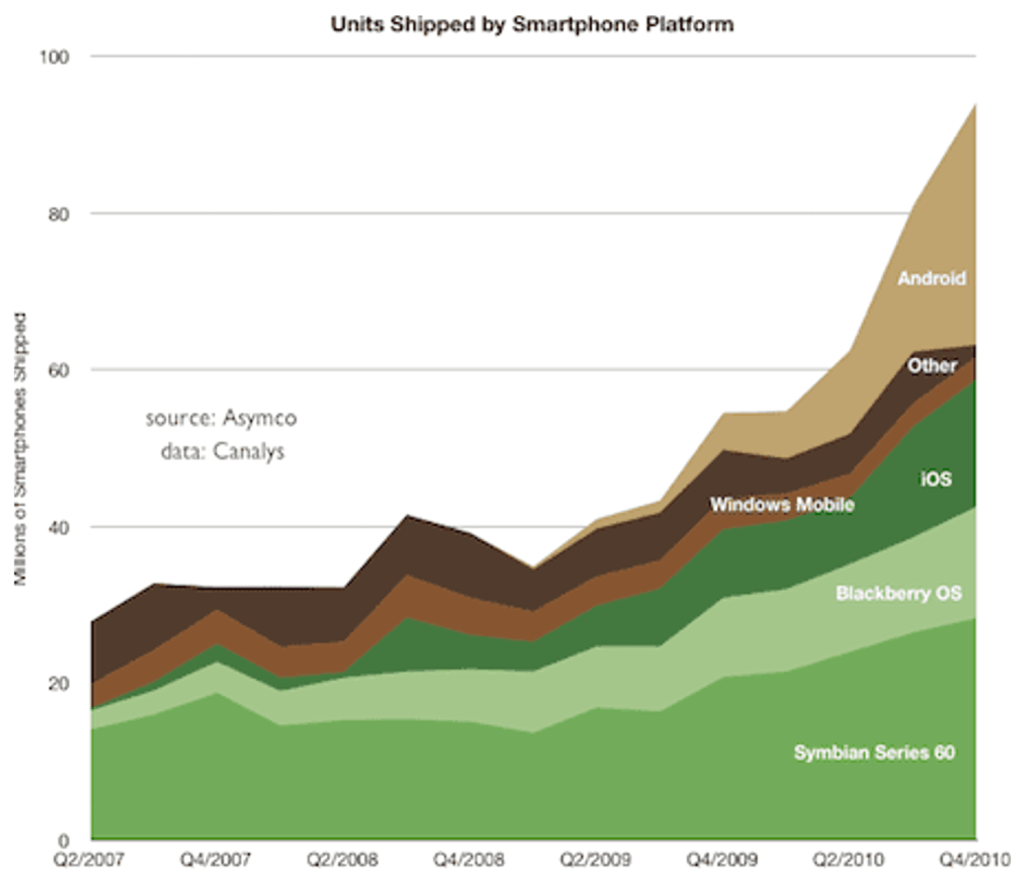
In 2011, Elop “took massive risks by putting all his eggs in one basket” (Nykänen & Salminen, 2017). Elop decided to go with Microsoft’s Windows Phone rather than Google’s Android or keep the Symbian software Nokia already used on its smartphones. Soon, Android OS and iOS phones became the clear winners, with Windows’ Smartphone operating system becoming irrelevant, dealing further damage to Nokia’s market standing.
Nokia sells its phone business to Microsoft in 2014.
In 2013, Nokia decided to sell its Devices & Services division to Microsoft, effectively exiting the phone hardware business under a 2-year non-compete. The decision has been regarded as difficult, albeit rational, and in the interest of the shareholders (Nykänen & Salminen, 2017).
Nokia refocuses on telecommunications infrastructure
From 2015 to 2016, following the sale to Microsoft, Nokia concentrated on telecommunications infrastructure and services. This included the acquisition of Alcatel-Lucent, one of the largest companies in networking and telco equipment at the time, for €15.6 billion (Forbes Trefis Team, 2015).
Communication Strategies
In a 2018 article, strategic communications expert Rod Hise observed, “communication within Nokia had disintegrated to the point of dysfunction,” even attributing it as the cause for Nokia’s loss of dominance in the phone market. He likens this to a lake where barriers impede oxygen circulation, paralleling Nokia’s hierarchical barriers that stifled internal information flow. This issue of restricted information flow is not uncommon and can be highly detrimental, as exemplified by the late 90s merger of Mercedes and Chrysler (Schmidt, 2023). In 1999, Nokia’s size was already significant, with over 55,000 employees in 140 countries. By 2008, this number had grown to 125.000, rendering communication an increasingly acute challenge amidst ongoing changes (Nokia, 2009 & Alsop, 2018a).
During this transitional phase, CEO Stephen Elop’s communication style, characterised as direct and clear, is notably illustrated in his “Burning Platform” memo (Arthur, 2011 & Appendix). In it, Elop analogises Nokia’s predicament to a person on a burning oil platform in the North Sea, facing the choice between being consumed by flames (symbolising Android & iOS) or leaping into the freezing unknown to escape. The man survives, profoundly changed by the experience (Arthur, 2011). While this metaphor was initially intended to catalyse change, it has been critiqued for potentially demoralising employees and eroding consumer confidence in Nokia’s existing products (Nykänen & Salminen, 2017).
I think that when confronted with such serious a situation, it is wise for the CEO to wake everyone up and to identify who is resilient and driven enough to rebuild the company. While it can be seen as a source of fear and negative sentiment, it also served as a necessary wake-up call.
Motivational Tactics
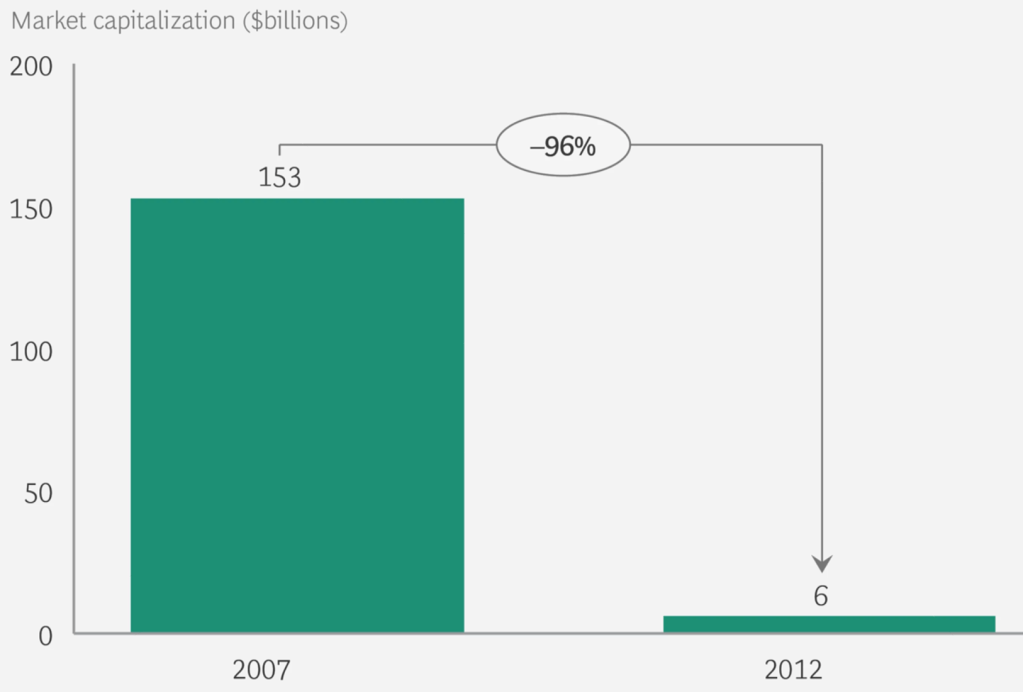
At the beginning of Nokia’s crisis, employee motivation presumably plummeted, mirroring the company’s drastic 96% decline in value due to its shrinking market share. The company faced a severe operational loss of $2 billion in 2012 alone (Baeza et al., 2017). To prevent a potential brain drain and the creation of a negative feedback loop between worsening performance and a talent exodus, rekindling motivation was crucial.
The best driver of talent retention and motivation at a company is non-financial incentives. According to a 2022 article by Fenton et al., published by McKinsey, five factors are key. Listed by their rank of importance the five factors are: Energizing employees through meaningful work, investing in early relationships between co-workers and managers, promoting a culture of development, providing the resources and environment to balance stress and well-being, and finally combining the non-financial motivators with financial incentives (Fenton et al., 2022). Expressed more comprehensively:
- Meaningful work
- Relationships
- Individual Development
- Stress Management
- Financial Incentives
At Nokia, the crisis itself naturally fostered an environment that addressed these factors. The company’s existential threat enriched employees’ work with significant meaning and purpose: the survival of the organisation. This shared goal led to a more democratic structure, aligning with Simon Sinek’s circle of trust principle (2014), and fostering stronger relationships, particularly in areas of new business and product development. However, this shift was less apparent in leadership (Nykänen & Salminen, 2017). The company-wide focus shift naturally spurred individual development. While specific strategies for stress management and financial incentives are less documented, excelling in the first three areas likely had a positive motivational impact.
I think this exercise went particularly well, owing to the nature of the crisis. Crisis tend to be events that separate those who are committed from those who aren’t as Walter Isaacson described in his biographic work on Elon Musk concerning X, this can lead to a more agile and efficient organisation (Isaacson, 2023).
Conflict Resolution Methods
As outlined previously, in times of great change within an organisation, aligning everyone towards a common goal is critical. Internal conflict can pose a great risk to the successful transition. Simultaneously, Nokia’s previous way of doing things had led them into a crisis and generated a demand for a new approach. Thus, the company needed to find a balance between acting with unity towards a better future and allowing for new ideas to improve its operations.
The public information suggests that CEO Elop’s approach was more about pushing through his strategic vision for Nokia rather than engaging in collaborative conflict resolution. Thus, according to the leader-type framework, he applied an autocratic style to conflict resolution. This is a strategy that is often observed with institutions in crises. The issue that comes with it is that alternative viewpoints that could offer a better solution to the situation are not heard. The authors of the book “Operation Elop” criticise him heavily for executing his vision without leaving enough time for consideration. One such example is that Elop did not leave Nokia enough time to investigate the impact of adopting the Windows Phone OS before signing with Microsoft. The Microsoft OS did not work with several of Nokia’s phones, causing significant issues (Doz, 2017).
In my opinion calling Elop “possibly the worst CEO” or a “Trojan horse” (Nykänen & Salminen, 2017) is difficult. While he made some detrimental decisions, it is difficult to discern between what conflict arises for the right, rather than the wrong reasons. Considering other strategies comes with an opportunity cost, as the time spent considering other strategies is not spent implementing the present strategy, thus falling behind on KPIs. Ultimately, Elop was tasked by the board and shareholders with implementing his vision, which arguably legitimises the prioritisation of his plans.
Stakeholder Management
In terms of stakeholder management, investors and shareholders, employees, and customers resemble the core and essential stakeholders of this initiative. Maintaining investor confidence was crucial for funding the repositioning, with their employees executing the initiative and the customers funding its longevity. If any one of these parties is mismanaged, the other two will likely experience a loss of faith in the company.
Amidst the market share loss, investors were managed well by Nokia’s leadership showing their loyalty to its shareholders’ interests. For instance, Nokia framed its main intention behind driving its repositioning as a way to act in its shareholder’s interest (Nykänen & Salminen, 2017). Nokia’s ability to acquire Alcatel-Lucent for €15.6 billion after their stock had crashed is a testament to their successful management of the relationship with investors. It also served as a demonstration of Nokia’s resilience and dedication to its new identity.
The management of employees has been detailed in previous sections, emphasising strategic internal changes and motivational tactics. In contrast, customer management required a distinct approach. As Nokia transitioned out of the phone market, ensuring the usability of existing Nokia phones for customers was crucial. At the same time, Nokia needed to forge new customer relationships in its redefined telecommunications sector. Leveraging its longstanding experience and previous client base in telecommunications, Nokia adeptly scaled its operations in this industry (Nokia, 2020). As with investors, success with customers was supported by Nokia’s firm commitment to its new identity.
Overall, Nokia’s stakeholder management appears largely successful. Despite criticisms of Elop’s employee management approach, the company’s adept handling of investor relations and successful pivot in customer engagement in the telecommunications sector underscore its effective stakeholder management strategies during this transformation.
Concluding
What Worked Well / Did Not
As a company, Nokia has both won and lost. They were once the largest phone manufacturer, with a market share of more than 49% and as of 2023, hold about 3% of global handset market share (Lee, 2013). Figure 3 shows Nokia never made a full recovery, their 2022 sales, while the highest in the last 9 years, were only half of their 2007 sales.
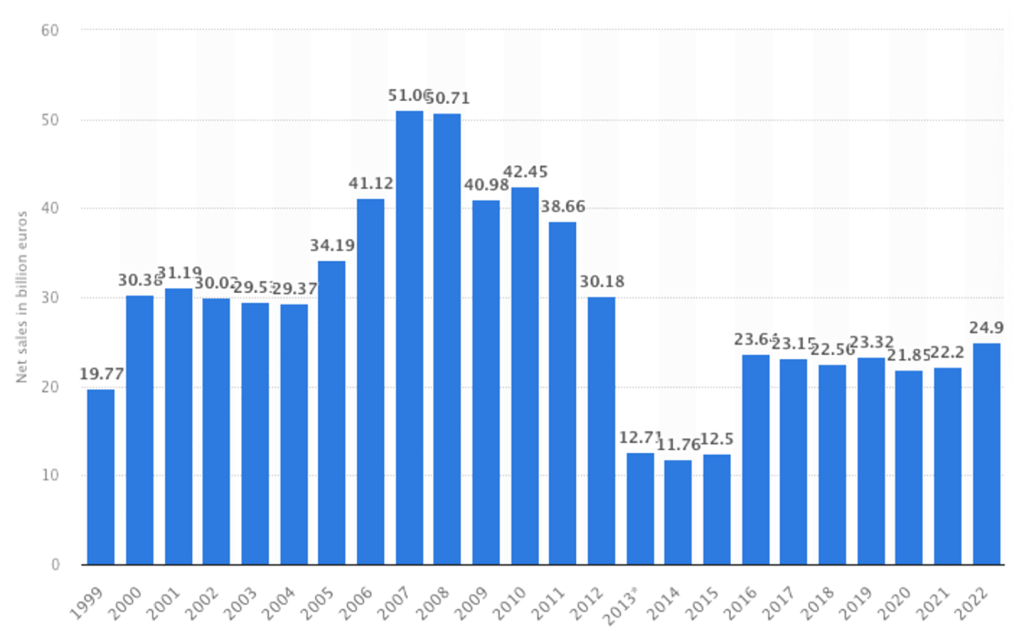
The substantial reduction of over 50% in sales and 46% in market share is an undeniable failure. Yet, the fact that Nokia still operates, and with net sales of €25 billion, is an indication of resilience and success. Despite the challenges, Nokia has managed to navigate through its crisis and reorient its focus to telecommunications.
The leadership of Stephen Elop at Nokia has been a subject of controversy. Some speculate that he was a ‘Trojan horse’ from Microsoft, positioned to ease Nokia’s acquisition. However, Charles Arthur’s analysis in 2014 suggests that Elop’s decisions, particularly the commitment to a single-platform strategy with the Windows Phone, were well-intentioned but ultimately flawed. Elop’s reluctance to diversify Nokia’s portfolio, notably not incorporating Android alongside Microsoft’s operating systems, can be seen as a missed opportunity to capture a broader market in the low and medium price ranges. Such diversification could have been more likely if Nokia’s leadership had fostered open communication regarding their strategic changes.
On the other hand, Elop’s assertive and autocratic approach to change management significantly benefited Nokia’s telecom sector. The unequivocal decisions, including the divestiture of their phone division and the acquisition of Alcatel-Lucent, demonstrated a firm commitment to Nokia’s new direction. This decisiveness was instrumental in reassuring shareholders, employees, and customers, thereby bolstering Nokia’s position in the telecommunications industry.
General Lessons Learned
The selection of a CEO by a company’s board during a crisis is crucial in determining the organisation’s future trajectory. This is a key lesson derived from the case study of Nokia. Our in-depth discussions about various leadership styles in class emphasise the importance of matching leadership types with specific situational demands. Reflecting on Nokia’s situation, it’s debatable whether Stephen Elop’s leadership was excessively autocratic. However, Nokia’s previous leadership regime was too autocratic, leading to a loss of competitive edge against more democratic and transformational companies like Apple. Leaders who excel are those capable of fostering adaptability and innovation. In an ever-evolving market, where consumer demands are continuously shifting, a company and its product strategies must be positioned to evolve to maintain competitiveness.
Appendix: Stephen Elop’s Burning Platform Speech / Memo.
The following is the memo to Stephen Elop’s “Burning Platform” speech, published by the Guardian (Arthur, 2011).
“Hello there,
There is a pertinent story about a man who was working on an oil platform in the North Sea. He woke up one night from a loud explosion, which suddenly set his entire oil platform on fire. In mere moments, he was surrounded by flames. Through the smoke and heat, he barely made his way out of the chaos to the platform’s edge. When he looked down over the edge, all he could see were the dark, cold, foreboding Atlantic waters.
As the fire approached him, the man had mere seconds to react. He could stand on the platform, and inevitably be consumed by the burning flames. Or, he could plunge 30 meters in to the freezing waters. The man was standing upon a “burning platform,” and he needed to make a choice.
He decided to jump. It was unexpected. In ordinary circumstances, the man would never consider plunging into icy waters. But these were not ordinary times – his platform was on fire. The man survived the fall and the waters. After he was rescued, he noted that a “burning platform” caused a radical change in his behaviour.
We too, are standing on a “burning platform,” and we must decide how we are going to change our behaviour.
Over the past few months, I’ve shared with you what I’ve heard from our shareholders, operators, developers, suppliers and from you. Today, I’m going to share what I’ve learned and what I have come to believe.
I have learned that we are standing on a burning platform.
And, we have more than one explosion – we have multiple points of scorching heat that are fuelling a blazing fire around us.
For example, there is intense heat coming from our competitors, more rapidly than we ever expected. Apple disrupted the market by redefining the smartphone and attracting developers to a closed, but very powerful ecosystem.
In 2008, Apple’s market share in the $300+ price range was 25 percent; by 2010 it escalated to 61 percent. They are enjoying a tremendous growth trajectory with a 78 percent earnings growth year over year in Q4 2010. Apple demonstrated that if designed well, consumers would buy a high-priced phone with a great experience and developers would build applications. They changed the game, and today, Apple owns the high-end range.
And then, there is Android. In about two years, Android created a platform that attracts application developers, service providers and hardware manufacturers. Android came in at the high-end, they are now winning the mid-range, and quickly they are going downstream to phones under €100. Google has become a gravitational force, drawing much of the industry’s innovation to its core.
Let’s not forget about the low-end price range. In 2008, MediaTek supplied complete reference designs for phone chipsets, which enabled manufacturers in the Shenzhen region of China to produce phones at an unbelievable pace. By some accounts, this ecosystem now produces more than one third of the phones sold globally – taking share from us in emerging markets.
While competitors poured flames on our market share, what happened at Nokia? We fell behind, we missed big trends, and we lost time. At that time, we thought we were making the right decisions; but, with the benefit of hindsight, we now find ourselves years behind.
The first iPhone shipped in 2007, and we still don’t have a product that is close to their experience. Android came on the scene just over 2 years ago, and this week they took our leadership position in smartphone volumes. Unbelievable.
We have some brilliant sources of innovation inside Nokia, but we are not bringing it to market fast enough. We thought MeeGo would be a platform for winning high-end smartphones. However, at this rate, by the end of 2011, we might have only one MeeGo product in the market.
At the midrange, we have Symbian. It has proven to be non-competitive in leading markets like North America. Additionally, Symbian is proving to be an increasingly difficult environment in which to develop to meet the continuously expanding consumer requirements, leading to slowness in product development and also creating a disadvantage when we seek to take advantage of new hardware platforms. As a result, if we continue like before, we will get further and further behind, while our competitors advance further and further ahead.
At the lower-end price range, Chinese OEMs are cranking out a device much faster than, as one Nokia employee said only partially in jest, “the time that it takes us to polish a PowerPoint presentation.” They are fast, they are cheap, and they are challenging us.
And the truly perplexing aspect is that we’re not even fighting with the right weapons. We are still too often trying to approach each price range on a device-to-device basis.
The battle of devices has now become a war of ecosystems, where ecosystems include not only the hardware and software of the device, but developers, applications, ecommerce, advertising, search, social applications, location-based services, unified communications and many other things. Our competitors aren’t taking our market share with devices; they are taking our market share with an entire ecosystem. This means we’re going to have to decide how we either build, catalyse or join an ecosystem.
This is one of the decisions we need to make. In the meantime, we’ve lost market share, we’ve lost mind share and we’ve lost time.
On Tuesday, Standard & Poor’s informed that they will put our A long term and A-1 short term ratings on negative credit watch. This is a similar rating action to the one that Moody’s took last week. Basically it means that during the next few weeks they will make an analysis of Nokia, and decide on a possible credit rating downgrade. Why are these credit agencies contemplating these changes? Because they are concerned about our competitiveness.
Consumer preference for Nokia declined worldwide. In the UK, our brand preference has slipped to 20 percent, which is 8 percent lower than last year. That means only 1 out of 5 people in the UK prefer Nokia to other brands. It’s also down in the other markets, which are traditionally our strongholds: Russia, Germany, Indonesia, UAE, and on and on and on.
How did we get to this point? Why did we fall behind when the world around us evolved?
This is what I have been trying to understand. I believe at least some of it has been due to our attitude inside Nokia. We poured gasoline on our own burning platform. I believe we have lacked accountability and leadership to align and direct the company through these disruptive times. We had a series of misses. We haven’t been delivering innovation fast enough. We’re not collaborating internally.
Nokia, our platform is burning.
We are working on a path forward — a path to rebuild our market leadership. When we share the new strategy on February 11, it will be a huge effort to transform our company. But, I believe that together, we can face the challenges ahead of us. Together, we can choose to define our future.
The burning platform, upon which the man found himself, caused the man to shift his behaviour, and take a bold and brave step into an uncertain future. He was able to tell his story. Now, we have a great opportunity to do the same.
Stephen.”
END OF THE MEMO.
My Sources
Abbas, T. (2023, March 3). Nokia Change Management Case Study. CMI. Link
Alsop, T. (2018a). Nokia employees 2005-2018 | Statista. Statista; Statista. Link
Alsop, T. (2018b). Nokia revenue 1999-2018 | Statista. Statista; Statista. Link
Arthur, C. (2011, February 9). Nokia’s chief executive to staff: “we are standing on a burning platform.” The Guardian; The Guardian. Link
Arthur, C. (2014, October 8). Elop was “wrong man to lead Nokia” says new book on phone company’s downfall. The Guardian. Link
Baeza, R., Lars Fæste, Lay, C., Tuukka Seppä, Bartletta, S., Amit Ganeriwalla, Moldenhauer, R., & Webb, D. (2017, November 13). NOKIA: Reprogramming for Growth. BCG Global; BCG Global. Link
Doz, Y. (2017, November 23). The Strategic Decisions That Caused Nokia’s Failure. INSEAD Knowledge. Link
Fenton, M., Gandhi, N., & Lauricella, T. (2022, January 31). When the grass is truly greener: How companies are retaining frontline talent. McKinsey & Company. Link
Forbes Trefis Team . (2015, April 16). Nokia’s $16.6 Billion Acquisition Of Alcatel-Lucent Explained. Forbes. Link
Hise, R. (2018, October 11). What led to Nokia’s fall? Bad communication – In Business Madison. In Business Madison. Link
Isaacson, W. (2023). Elon Musk. Simon and Schuster.
Lee, D. (2013, September 3). Nokia: The rise and fall of a mobile giant. BBC News. Link
Macrotrends. (2019). Nokia Revenue 2006-2019 | NOK. Macrotrends.net. Link
Nokia. (2009). Nokia in 2008. Link
Nokia. (2020). Our history | Nokia. Nokia; Nokia. Link
Nykänen, P., & Salminen, M. (2017). Operation Elop. In Medium. Medium. Link
Schmidt, J. (2023, November 11). Mercedes and Chrysler – A cultural mismatch. Jérôme Schmidt. Link
Sinek, S. (2014). Leaders Eat Last: Why Some Teams Pull Together and Others Don’t. Portfolio Penguin.
StudySmarter UK. (2019). Nokia Change Management: Plan & Failure | StudySmarter. StudySmarter UK. Link
